
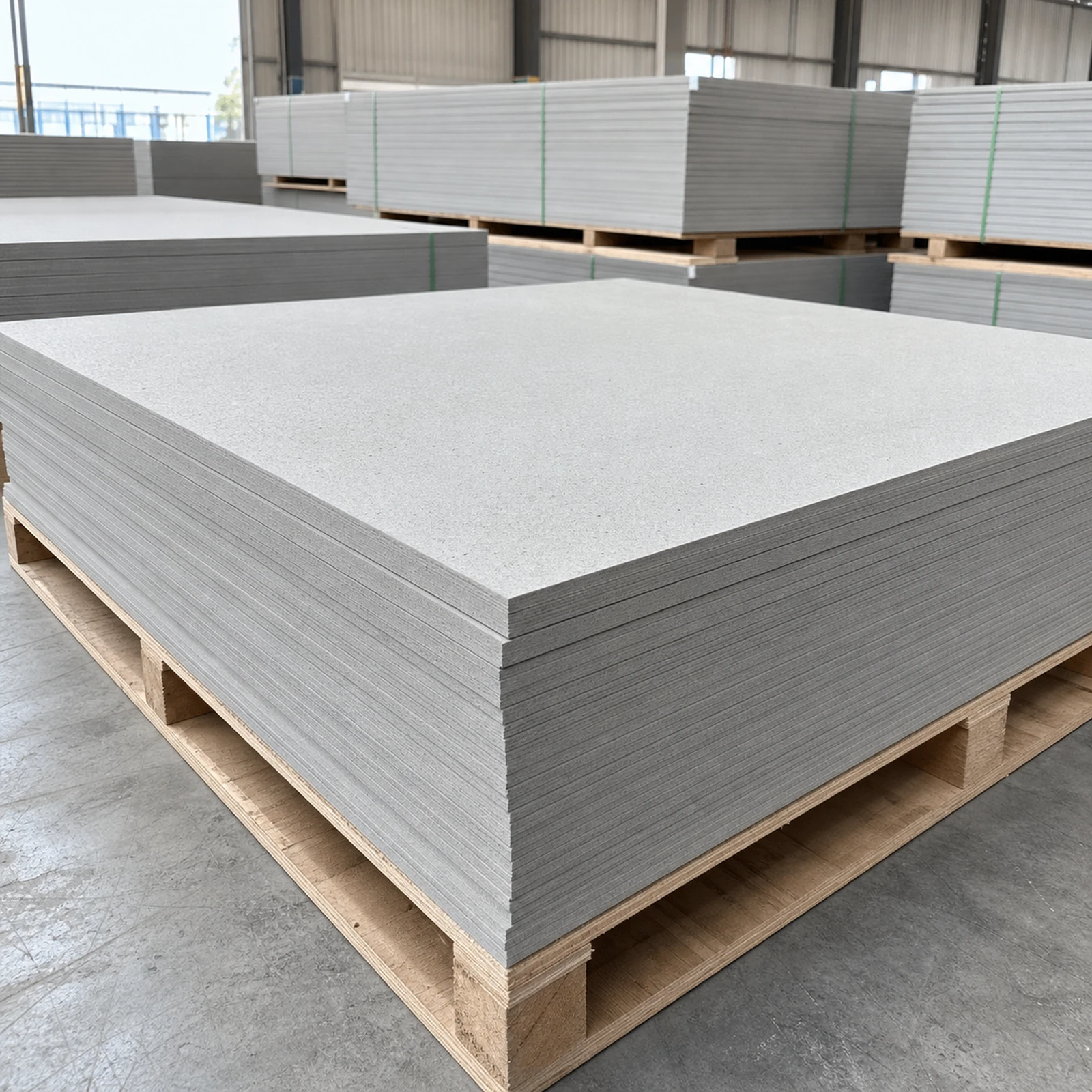
A supplier may quote an impressive monthly output, but that number does not automatically prove that your exact board specification can be delivered on time. Capacity depends on product mix, board thickness, curing method, finishing, machining, inspection, packaging and the orders already committed to other customers. For overseas importers, architects and contractors, the useful question is not “How large is the factory?” but “What is the available, qualified capacity for this order?”
This guide explains eight practical ways to verify fiber cement board manufacturer capacity before placing a deposit. It focuses on evidence that B2B buyers can request and compare. It does not replace a factory audit or a binding production agreement, and all output figures should be confirmed for the selected product, line and delivery period.
Why Nameplate Capacity Is Not Available Capacity
Nameplate capacity is a theoretical or design figure for equipment under defined conditions. Saleable output is reduced by product changeovers, planned maintenance, quality holds, trial runs, finishing operations and packaging constraints. Available capacity is smaller again because part of the schedule may already be reserved.
Buyers should therefore separate four terms in supplier discussions: installed capacity, normal saleable output, committed output and available output for the requested delivery window. When evaluating our standard fiber cement boards, provide the thicknesses, dimensions, edge details, quantity and destination so the production route can be reviewed against the actual order rather than a generic factory figure.
8 Capacity Checks for Overseas B2B Buyers
1. Define the Exact Product Mix Before Asking for Capacity
Capacity cannot be evaluated from total square metres alone. Freeze the product schedule with board grade, nominal thickness, dimensions, density range where relevant, surface finish, edge profile, machining, color, tolerances and quantity by SKU. Identify which products are standard and which require a special setup.
A mixed order with many thicknesses or short production runs may require more changeovers than one large standard SKU. Ask the manufacturer to calculate capacity for the submitted mix and to state any assumptions. This makes the answer more useful than a single factory-wide monthly number.
2. Map the Complete Production Route
Request a simple process map from raw-material preparation through forming, pressing or calibration, curing, drying or conditioning, sanding, coating, cutting, machining, inspection and packing. Not every product uses every step. The route should identify which operations are performed in-house and which are subcontracted.
Confirm that the quoted product matches the route and factory named in supporting documents. Our guide to fiber cement board manufacturer quality control explains the manufacturing and inspection stages that should remain linked to product identity and batch records.
3. Identify the Bottleneck Operation
The slowest required operation controls sustainable output. Forming equipment may run quickly while curing space, autoclave cycles, coating, CNC machining or packing limits the final shipment rate. Ask which process is the bottleneck for your product and how the supplier calculated its hourly, daily or cycle-based output.
For batch processes, request the usable batch quantity, normal cycle duration, expected number of cycles and allowance for loading, unloading and inspection. For continuous processes, request normal line speed, operating hours and planned downtime. The goal is not to demand confidential formulas; it is to verify that the capacity claim has a logical basis.
4. Separate Gross Output From Qualified Output
Gross production is not the same as conforming product released for packing. Ask for normal first-pass yield or saleable-output records for a comparable product and period. Review how rejected, reworked or downgraded boards are identified and excluded from the export order.
Quality evidence should include agreed dimensional checks, visual inspection, batch identification and any product-specific performance tests required by the purchase specification. Do not build the delivery plan on perfect yield. The production schedule should include a reasonable allowance for quality control and replacement production.
5. Verify Committed and Available Capacity
A capable line may still be unavailable during your required window. Ask the supplier to show a redacted production-loading plan or written capacity reservation identifying the proposed line, production period and order quantity. Commercially sensitive customer names can remain hidden.
Confirm whether capacity is reserved before or only after the deposit, approved sample, final artwork or technical sign-off. State the deadline for buyer approvals so both parties understand which delays may move the slot. The purchase contract should define how schedule changes are communicated and approved.
6. Check Finishing, Machining and Packaging Capacity Separately
Value-added operations frequently create a second bottleneck. Coated boards may require surface preparation, multiple applications, drying time and color inspection. Cut-to-size panels, drilled boards or profiled edges require machine time, tooling and separate quality checks. Export packing requires pallets, protectors, wrapping, labels and container planning.
Ask for daily available output at each required downstream step. A fiber cement board manufacturer should not promise the shipment date from base-board production alone when finishing or packing is still unplanned. Verify that packaging materials will be ready before the boards reach the packing area.
7. Review Maintenance, Utilities and Contingency Plans
Request the planned maintenance calendar for the delivery period and ask how critical equipment failures are handled. Relevant questions include spare-part availability, backup machines for cutting or packing, utility reliability and alternative qualified production lines. Any transfer to another line or plant should require written approval when it affects product identity or supporting evidence.
Contingency does not mean claiming that delays are impossible. A credible plan identifies likely constraints, escalation contacts, recovery options and the point at which the buyer will be notified. For time-sensitive projects, agree which milestones trigger corrective action.
8. Convert the Capacity Claim Into Measurable Milestones
Break the order into dates that can be verified: technical approval, raw-material readiness, production start, first batch, in-process inspection, completion, packing, pre-shipment inspection, container booking and loading. Assign evidence to each milestone, such as a signed schedule, batch list, inspection record, packing list or loading photographs.
For multiple SKUs or phased deliveries, use a weekly quantity plan rather than one final completion date. Our article on planning fiber cement board export orders provides additional guidance for mixed containers, pallet weights, loading plans and document control.
Technical Capacity Verification Matrix
Use the following schedule during quotation and pre-production review. Values must be supplied for the selected product route and delivery window.
| Capacity item | Buyer question | Evidence to request |
|---|---|---|
| Product mix | Which SKUs, thicknesses and finishes are included? | Controlled board schedule and approved samples |
| Production route | Which line and operations will manufacture the order? | Process map with in-house and outsourced steps |
| Bottleneck | Which required operation limits output? | Cycle or line-speed calculation for the order |
| Qualified output | How much conforming product is normally released? | Comparable production and quality summary |
| Available capacity | What output remains after existing commitments? | Redacted loading plan or written slot reservation |
| Finishing and packing | Can downstream operations match base-board output? | Daily plan for machining, coating and packing |
| Maintenance risk | What planned downtime and recovery options apply? | Maintenance calendar and contingency statement |
| Delivery control | How will progress be measured and reported? | Milestone schedule with evidence and owners |
A Four-Stage Capacity Approval Workflow
Before Quotation
Send the complete board schedule, required standards, finish, quantity, delivery phases, destination port and requested shipment date. Ask for capacity by product route, not only total factory output. The broader product category can help buyers identify which applications and SKUs need separate production assumptions.
Before the Deposit
Review the bottleneck calculation, current loading, production slot, lead-time assumptions and payment milestones. Confirm which buyer approvals release the slot. Include an agreed change-control process for quantities, specifications and delivery dates.
During Production
Receive weekly progress against the SKU plan. Compare produced, inspected, released and packed quantities rather than accepting one combined percentage. Investigate repeated quality holds or delays at finishing and packing before they affect container bookings.
Before Shipment
Reconcile the batch list, released quantity, packing list and loading plan. Confirm that container bookings match the phased schedule. Keep final inspection and shipping documents connected to the same order and batch references.
Common Capacity Warning Signs
- The supplier quotes one monthly number without identifying the product or line.
- Capacity is calculated from forming speed while curing, finishing or packing is ignored.
- The schedule assumes perfect yield and no maintenance downtime.
- No distinction is made between already committed and available capacity.
- Special machining or coating is promised without a separate output plan.
- The factory refuses to provide any milestone evidence after receiving the deposit.
- Production may be transferred to another plant without buyer approval.
FAQ: Fiber Cement Board Manufacturer Capacity
Is the largest factory always the safest supplier?
No. Installed scale matters, but order-specific available capacity, quality consistency, communication and traceability are more useful indicators. A smaller qualified line with a protected slot may be lower risk than a larger but fully committed factory.
How should buyers compare capacity quoted in sheets and square metres?
Convert both figures using the exact board dimensions and thickness schedule. Also compare weight, product route and required finishing. Square metres alone can hide the extra time required for thick, coated or machined boards.
What is the most important capacity document before a deposit?
No single document is sufficient. A strong package includes the controlled product schedule, proposed line and route, bottleneck calculation, available-capacity confirmation and milestone plan. These items should agree with the commercial delivery commitment.
Can one production line make every fiber cement board specification?
Not necessarily. Equipment limits, curing method, pressing, finishing and certifications may differ by product. Buyers should confirm that the exact order can be manufactured on the proposed line within the scope of relevant product data and evidence.
How often should production progress be reported?
Use a frequency appropriate to order duration and risk. Weekly reporting is practical for many export orders, while short or urgent runs may need milestone-based updates. Reports should separate produced, inspected, released and packed quantities.
Prepare a Capacity-Based Manufacturer Enquiry
A credible capacity plan connects the exact product mix to a defined production route, bottleneck calculation, available slot and measurable milestones. This lets buyers compare delivery promises on evidence instead of factory size alone.
For product data, export packing details and an order-specific production review, contact Shijiazhuang Mainland with the board schedule, quantity by SKU, destination port and requested delivery window.