
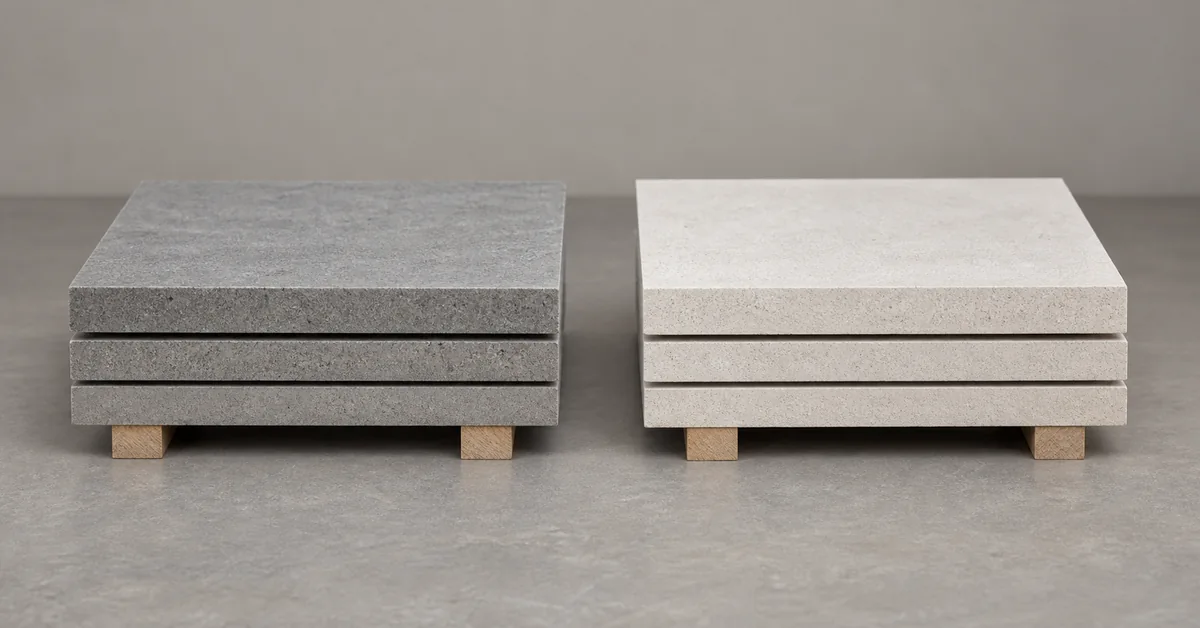
A clean sample can make a strong first impression, but appearance alone does not prove that bulk boards will match a project specification. A useful approval sample must have a known product identity, measurable characteristics, representative production history and a clear connection to the purchase order. Without that control, the buyer may approve one board while the factory manufactures another grade, thickness, surface or production route.
This guide explains eight practical ways to approve samples from a calcium silicate board supplier before a bulk order. It is written for overseas B2B buyers, architects, facade and interior contractors, modular builders and quality teams. The suggested checks are a procurement framework rather than universal acceptance limits: every value should be agreed for the selected product, application, test method and project standard.
Why a Display Sample Is Not an Approved Reference
Sales samples may be cut from convenient stock and may not represent the proposed production line, raw-material formulation, thickness range or surface treatment. Small pieces are useful for reviewing color and texture, but they cannot demonstrate full-board flatness, edge quality, pallet behavior or system performance. A technical approval sample should therefore be supported by documentation and retained as a controlled reference.
Start with the intended product. Buyers reviewing our standard calcium silicate boards should provide the application, nominal thickness, dimensions, quantity, installation method and required evidence. This allows the supplier to select a representative board rather than sending a generic piece.
8 Sample Approval Checks for International Buyers
1. Confirm Product Identity and Sample Traceability
Ask the supplier to label each sample with product name or code, nominal thickness, dimensions, production date, batch or lot reference, factory and proposed manufacturing line. The label should correspond with the quotation, technical data sheet and sample submission form. If several grades are under review, assign a unique sample ID to each one.
Record whether the sample came from routine production, a pilot run or warehouse stock. A pilot sample may be suitable for design review, but it should not be presented as evidence of normal production consistency. Any change in formulation, reinforcement, curing route, facing, coating or manufacturing location after approval should trigger a documented review.
2. Approve a Full-Size Board Where Geometry Matters
A small coupon cannot reveal bow, twist, squareness, edge damage or dimensional variation across a full sheet. For partition linings, ceilings, prefabricated modules and large-format panels, request at least one full-size board from the proposed thickness and production route. Protect it during transport so shipping damage is not confused with manufacturing quality.
Measure length, width, thickness at agreed positions, diagonal difference, edge straightness and visible flatness using documented methods. Do not invent tolerances after delivery. Put the nominal values, permissible deviations, measurement equipment and conditioning state in the approval schedule before the sample is tested.
3. Record Density and Moisture Condition Together
Board mass and calculated density can help identify whether the sample is broadly consistent with the declared grade, but the result depends on dimensions, moisture condition and the method used. Record sample mass, measured dimensions, conditioning history and the supplier-declared density range. Compare like with like.
Moisture content or equilibrium condition may influence weight, machining behavior and dimensions. Agree whether samples are assessed as received or after conditioning under a defined laboratory environment. For humid applications, review our guide to selecting calcium silicate boards for wet areas, while remembering that moisture resistance does not remove the need for correct joints, finishes and system detailing.
4. Check Mechanical Properties Against the Application
Required mechanical evidence depends on how the board will be used. A non-loadbearing lining, suspended ceiling panel, tile-backer substrate and prefabricated wall skin may have different priorities. Ask the calcium silicate board supplier to identify the applicable test method, specimen orientation, conditioning and declared result for the exact product.
Relevant checks may include flexural strength, screw holding or pull-through behavior, edge integrity, impact performance, hardness and handling resistance. Do not compare results from different test methods as if they were interchangeable. If the project relies on framing, fasteners or joint treatment, approve the complete installation build-up or a representative mock-up rather than the board alone.
5. Match Surface and Edge Quality to the Finish
Review both faces under consistent lighting. Record surface texture, sanding marks, pinholes, contamination, color variation, exposed reinforcement, edge condition and corner damage. Define which face is intended to receive paint, wallpaper, skim coat, tile adhesive or another finish. A sample described only as “smooth” is difficult to enforce during bulk inspection.
Run a small compatibility trial with the actual primer, coating, adhesive, sealant or finish system proposed for the project. Follow the finish manufacturer’s preparation and curing instructions. Check adhesion, visual uniformity and any evidence of staining, blistering or excessive absorption. The trial result applies only to the tested board and finish combination.
6. Review Fire and Moisture Evidence by Exact Scope
A sample cannot prove a fire classification by visual inspection. Request the relevant report, classification document or certificate and confirm the product name, thickness, density or composition, substrate, joints, fixings, framing, insulation, orientation and field of application. A board reaction-to-fire result is not automatically the same as a wall or ceiling system fire-resistance result.
Use the same discipline for moisture, dimensional movement, mould or durability claims. Identify the test standard, specimen condition, result and limits of application. Marketing phrases such as “fireproof” or “waterproof” should not replace project-specific evidence. Where local approval is required, the architect, engineer or authority should confirm acceptability before procurement.
7. Create a Signed Golden Sample and Approval Record
Once the review is complete, retain an approved reference, often called a golden sample. Mark it with the sample ID, approval date, signatures or digital approval references and any accepted limitations. Store it flat, dry and protected from damage. The supplier should retain a matching reference where practical.
The approval form should list all controlled characteristics, test reports, approved finishes, deviations and unresolved items. Photographs are useful, but they should supplement rather than replace the physical reference and measured data. State how long the sample remains valid and what changes require resubmission.
8. Connect Sample Approval to Bulk Production and Inspection
Sample approval must flow into the purchase specification, pre-production meeting, inspection plan and packing instructions. Identify the production lot, sampling frequency, acceptance criteria, inspection location and disposition process for nonconforming boards. Define whether the buyer or third-party inspector will compare bulk boards with the retained reference.
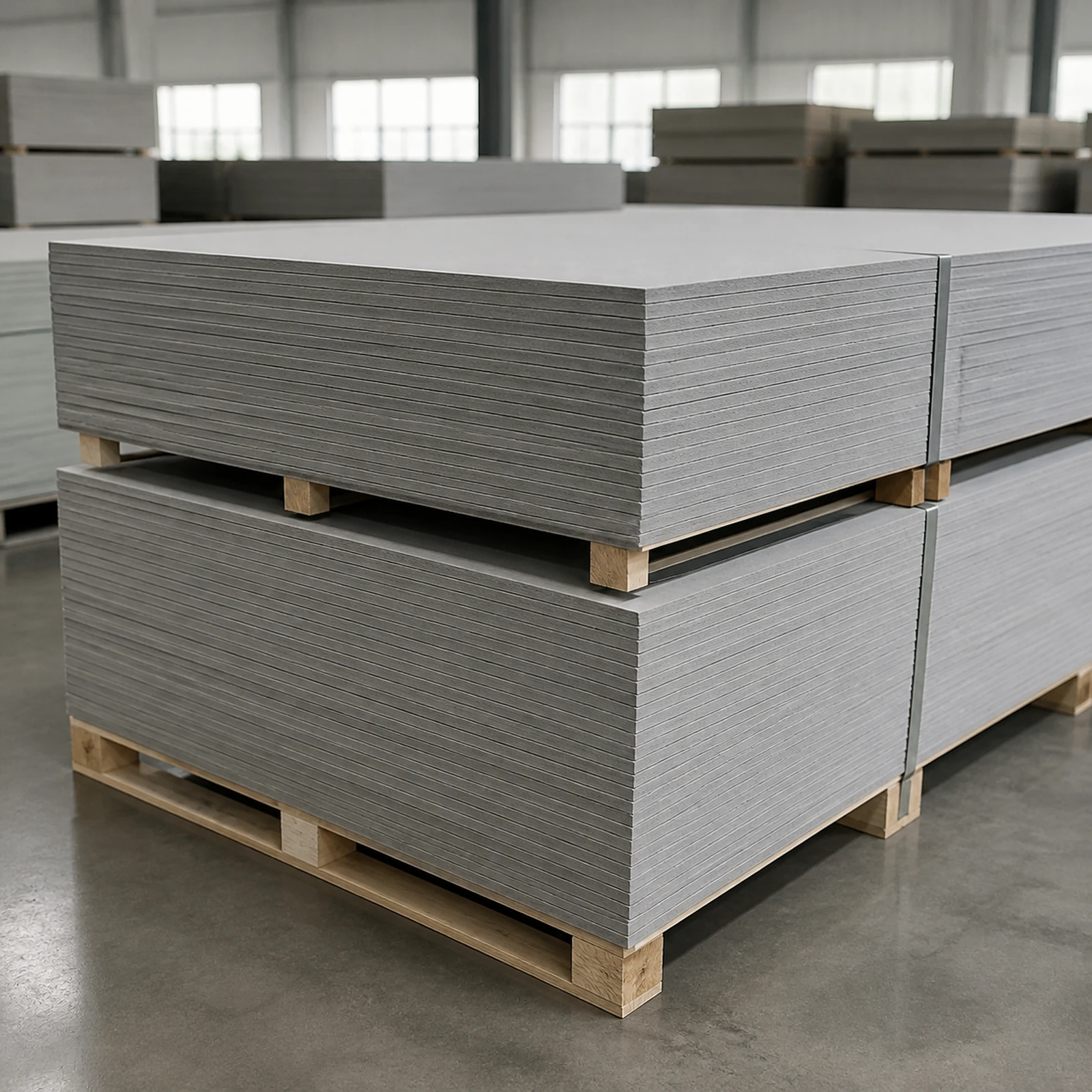
Ask for a pre-production or first-off sample when the bulk order uses a new thickness, custom machining, coating, printed marking or special packaging. Shipping protection should also be reviewed because an approved board can still arrive damaged. Our article on preventing calcium silicate board shipping damage covers pallet design, edge protection, moisture barriers and container control.
Technical Sample Approval Matrix
The table below provides a practical structure for the sample submission. Project values must come from the agreed product specification and applicable test methods.
| Approval item | Record or measure | Acceptance basis |
|---|---|---|
| Product identity | Code, grade, factory, line and batch | Quotation, data sheet and submission form agree |
| Dimensions | Length, width, thickness and diagonals | Agreed nominal values, tolerance and method |
| Geometry | Squareness, edge straightness, bow and twist | Full-size reference and project tolerance |
| Mass and density | Mass, measured volume and conditioning state | Supplier-declared range using one method |
| Surface and edges | Face quality, texture, defects and corner condition | Written defect criteria and approved reference |
| Mechanical evidence | Application-relevant test results | Exact product, orientation and test standard |
| Fire and moisture evidence | Report number, scope and limitations | Project system and approval requirements |
| Finish compatibility | Primer, coating or adhesive trial | Approved board and finish combination |
| Bulk control | Lot, sampling frequency and inspection records | Purchase specification and inspection plan |
A Four-Stage Approval Workflow
Stage 1: Supplier Submission
Send a controlled request stating product application, thickness, dimensions, system build-up, finish, required reports, destination and schedule. The broader building board product category can help teams separate calcium silicate, fiber cement and application-specific options before samples are requested.
Stage 2: Document and Sample Review
Check that the sample label, data sheet, declaration and reports refer to the same product. Inspect and measure the board using the agreed method. Record results, photographs, deviations and questions in one approval form.
Stage 3: Mock-Up or Compatibility Trial
Where project risk justifies it, install the board on the proposed framing with actual fixings, joint treatment and finish. Assess workability, edge behavior, surface preparation and completed appearance. System fire performance must rely on applicable evidence, not an informal site trial.
Stage 4: Golden Sample and Production Release
Issue an approval status: approved, approved with comments, revise and resubmit, or rejected. Release bulk production only when critical technical questions are closed. Link the approved sample ID to the purchase order and inspection plan.
Common Sample Approval Mistakes
- Approving an unlabelled sample that cannot be traced to a production batch.
- Using a small coupon to approve full-board flatness and squareness.
- Comparing density or mass without recording moisture condition and dimensions.
- Accepting fire or moisture claims that refer to a different product or system.
- Testing paint or adhesive without recording brand, preparation and curing conditions.
- Failing to retain a signed golden sample for bulk inspection.
- Allowing a formulation, factory or surface change without formal resubmission.
FAQ: Calcium Silicate Board Supplier Samples
How many samples should a buyer request?
The quantity depends on the number of grades, tests and mock-ups. Request enough material for dimensional review, finish trials, application-specific testing and one retained reference. At least one full-size board is advisable when geometry, handling or installation must be assessed.
Can a free sales sample be used as the golden sample?
Yes, but only if its identity and production route are confirmed, all required checks are completed and both parties formally accept it as representative. An anonymous showroom piece is not a controlled reference.
Should buyers retest every declared property?
Not necessarily. Use a risk-based plan that combines document review, supplier data, independent evidence and selected verification tests. Critical regulatory or contractual requirements may require accredited testing or third-party confirmation.
What happens if the bulk boards differ from the approved sample?
Follow the purchase specification and nonconformity procedure. Isolate the affected lot, document the difference, review its technical impact and agree rejection, sorting, rework, concession or replacement before shipment or installation.
When should a calcium silicate board supplier resubmit samples?
Resubmission is appropriate after material formulation, reinforcement, factory, line, curing, thickness, surface, edge, coating or packaging changes that may affect approved characteristics. The change-control requirement should be written into the order.
Prepare a Controlled Sample Request
A strong sample process converts visual approval into measurable procurement control. It links the exact board to declared data, system evidence, a retained reference and a practical bulk-inspection plan. That connection reduces ambiguity for the buyer and gives the supplier a clearer production target.
To request product data and representative samples, contact Shijiazhuang Mainland with the application, board schedule, required evidence, finish, estimated quantity and destination port.