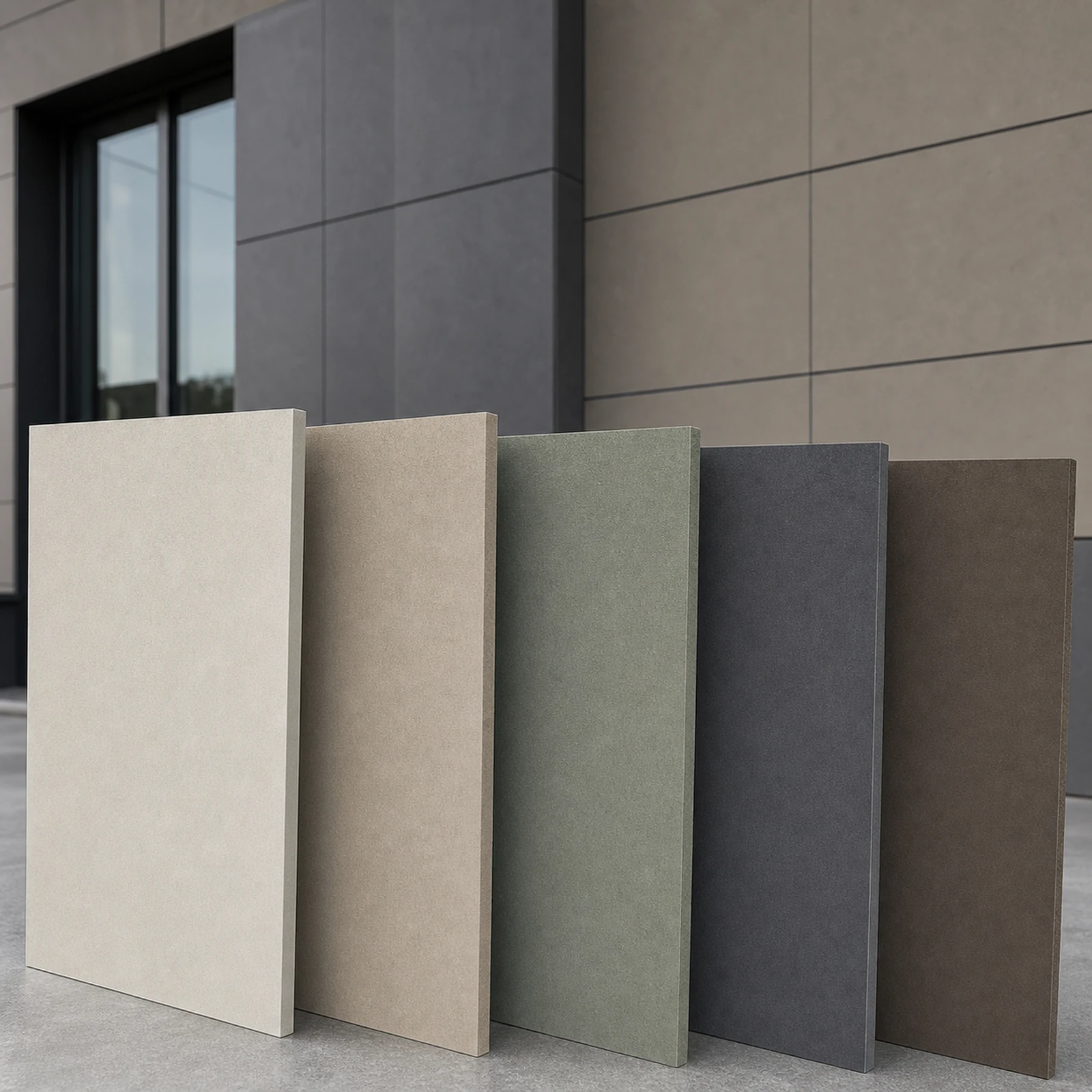
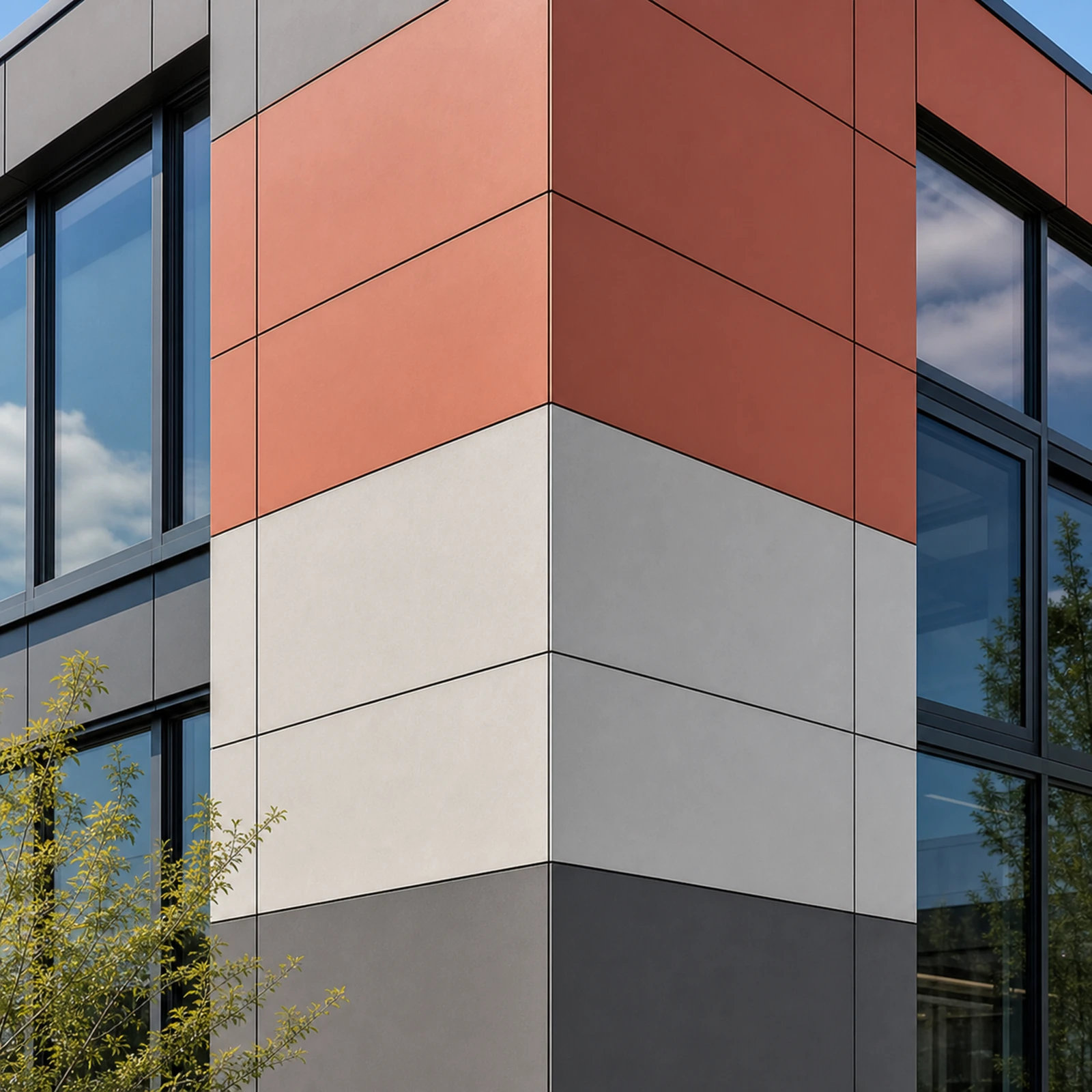
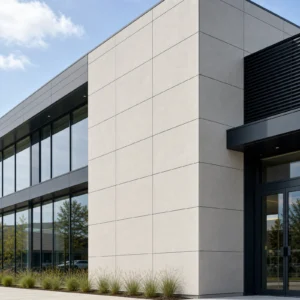
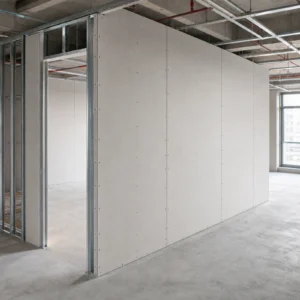
Composite Panels combine fiber cement board performance with decorative or functional laminated structures for projects that need a durable panel solution. They are suitable for facade, interior, and system-based applications where impact resistance, dimensional stability, surface appearance, and efficient installation must be balanced.
Recommended Applications
Decorative wall panel systems for commercial interiors
Facade and feature wall packages using fiber cement board as a stable substrate
Layered building panels for project-specific requirements
Distributor programs requiring consistent panel appearance and packaging
Specification and Selection Notes
Composite panel performance depends on the full build-up, not only the base board. Buyers should confirm substrate type, surface layer, adhesive or lamination method, panel thickness, edge condition, fixing method, fire requirements, and whether the finished panel will be used indoors, outdoors, or in a protected semi-exterior location.
Composite panels are used when a project needs a multi-layer board solution for facade, feature wall, backing, or specialty building-envelope applications. For B2B buyers, the key is to define the target assembly, required finish, fixing method, and expected handling conditions before comparing panel options.
Best-Fit Applications
Facade and feature wall systems where panel build-up matters
Commercial exterior or semi-exterior lining with project-specific finish requirements
Backing or substrate applications that require stable board performance
Distributor product lines that combine decorative and functional board options
Specification Checklist for B2B Buyers
Confirm panel composition, thickness, surface finish, board size, and tolerance.
Review compatibility with sub-frame, fixing, joint, sealant, and coating systems.
Request sample panels and packing details before confirming repeat export orders.
Procurement Notes
Composite panel purchasing should start with the intended system, not only the panel name. Buyers should share drawings, target finish, installation method, and destination market so that quotation and packing can match the real project conditions.
What should be confirmed for composite panels?
Confirm composition, thickness, surface finish, size, tolerance, fixing method, packing, and whether samples are needed.
Are composite panels mainly decorative?
Some are decorative, while others are selected for functional board build-up. The correct choice depends on the project system.
Can Mainland support export packing?
Yes. Buyers can discuss pallet protection, container loading, labeling, and distributor packing requirements.