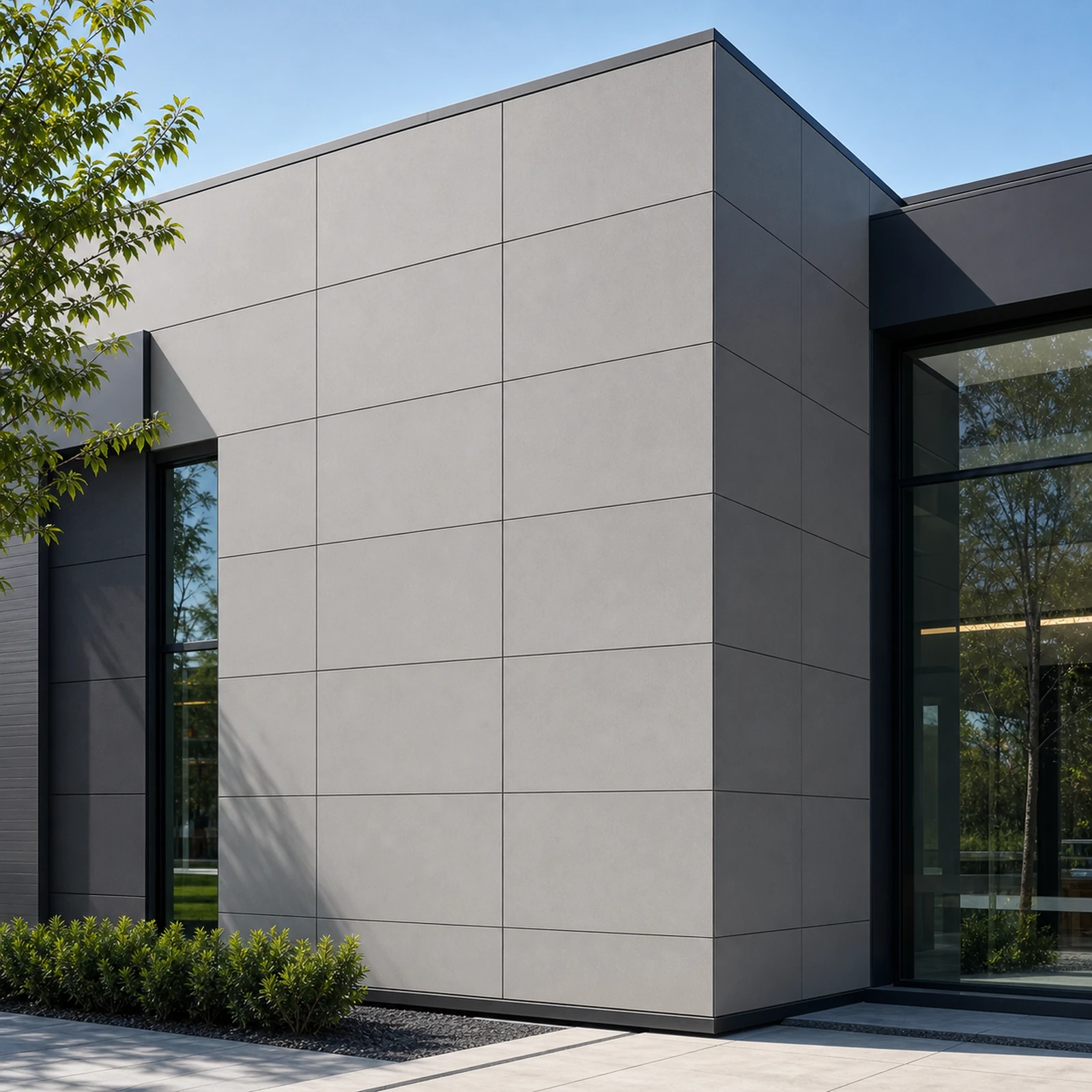
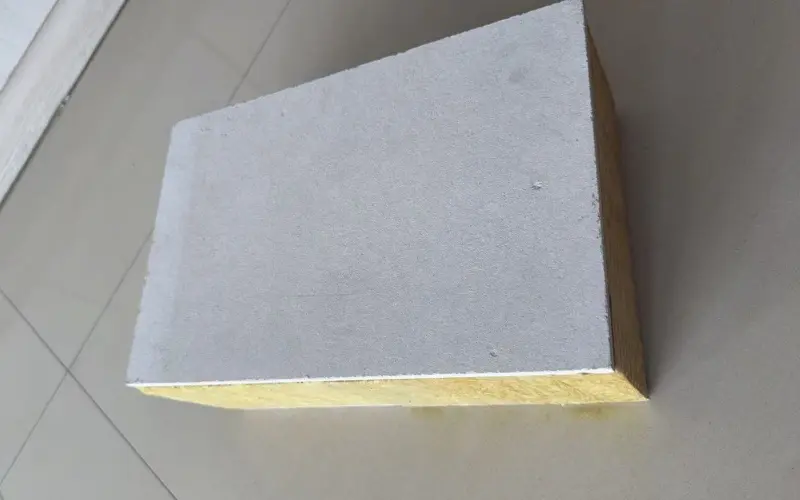
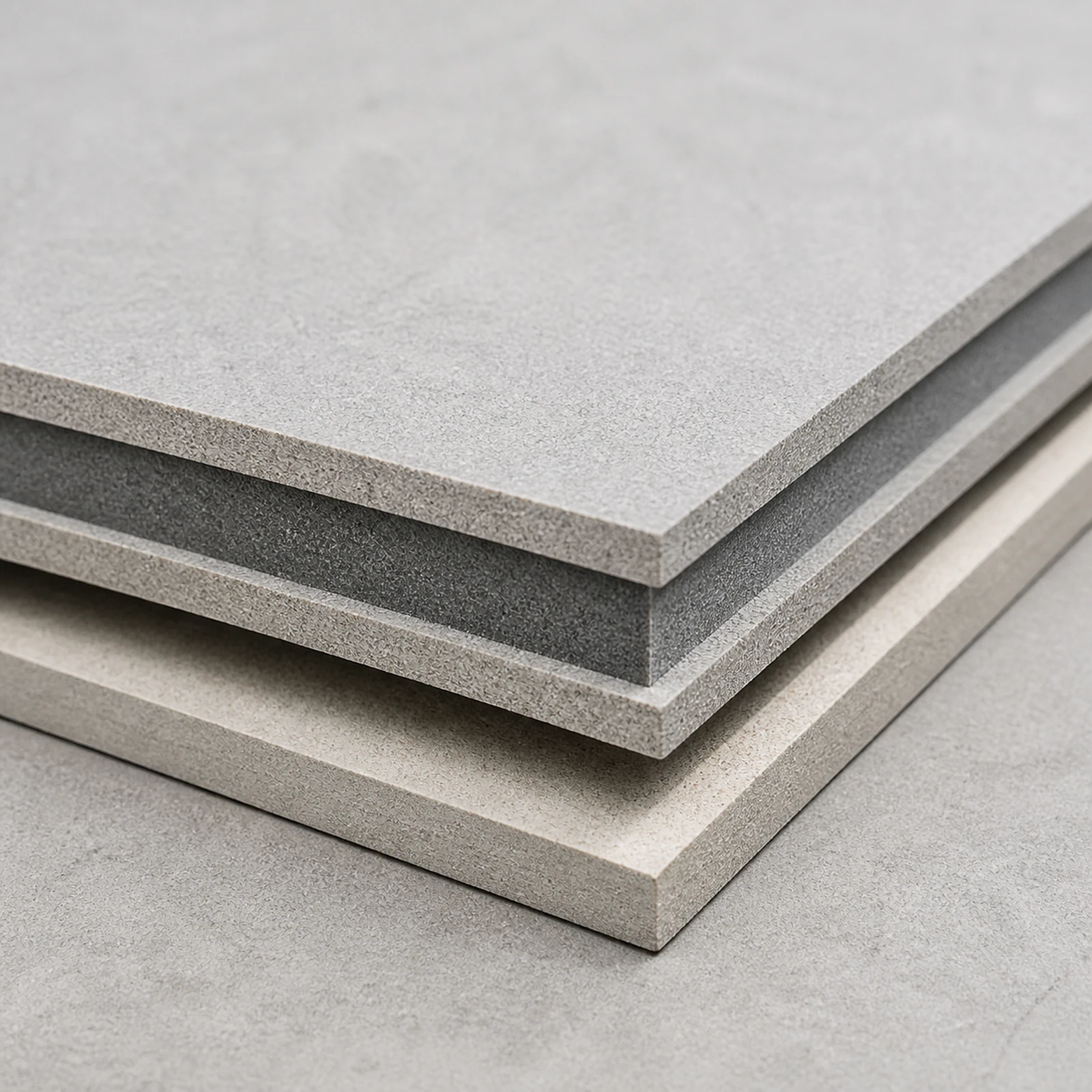
Fiber Cement Composite Panels are engineered for modern facade and decorative panel applications that require a durable fiber cement surface with strong design flexibility. They are used in commercial exteriors, feature walls, interior panels, and project-specific cladding systems where surface quality, dimensional stability, and long-term performance matter.
Recommended Applications
Modern facade and wall panel systems
Decorative exterior or interior feature walls
Panelized cladding packages requiring a stable fiber cement surface
Distributor and OEM programs needing differentiated board products
Specification and Selection Notes
Composite panel selection should confirm the base board, surface layer, panel thickness, bonding method, finish type, fixing detail, fire requirement, and exposure condition. For exterior applications, the full wall system must include appropriate ventilation, drainage, sub-framing, and joint design. For interior applications, surface durability, cleaning method, and installation tolerance are key.
For samples, specifications, and export quotation, contact our team.
Fiber Cement Composite Panel Procurement Guide
Fiber cement composite panels are selected by distributors, facade contractors, and project buyers who need a cement-based panel format for decorative wall systems, exterior cladding packages, feature walls, and specialty building-envelope applications. The correct panel should be selected according to the final assembly, not only the product name.
Best-Fit Applications
Facade and feature wall panel systems.
Commercial exterior or semi-exterior lining with planned fixing details.
Composite board programs for distributors and project suppliers.
Decorative panel packages that require stable export packing and sample approval.
Composite panel purchasing should begin with the intended system. Buyers should share drawings, target finish, installation method, destination market, and expected quantity so that the quotation can include realistic production, packing, and delivery assumptions.
Who buys fiber cement composite panels? Typical buyers include distributors, facade contractors, construction material importers, and project suppliers.
What is most important for decorative composite panels? Sample approval, finish consistency, surface protection, edge quality, and export packing are especially important.
Can panels be supplied for OEM or distributor programs? Yes. Buyers can discuss regular dimensions, labeling, packing requirements, and project-based supply plans before bulk orders.
Product
Fiber Cement Composite Panels
Thermal Insulation
Made with EPS particles and lightweight cement core, the panel offers excellent heat insulation, helping maintain a stable indoor temperature.
Thermal Preservation
Main materials are anti-freezing, eco-friendly, and designed to reduce energy consumption in various climate conditions.
Fire Resistance
Cladded with 4.5mm fiber cement board on both sides, the panel can withstand temperatures over 1000°C for more than 4 hours, certified non-combustible.
Water Resistance
Proven through immersion tests: the panel does not absorb water or leak even after 1 year of water exposure, ideal for wet-area applications.
Sound Insulation
The EPS polystyrene granules inside the core provide effective acoustic insulation and sound absorption, improving indoor comfort.
Ease of Installation
Can be installed quickly using PU foam or cement-based adhesive, suitable for dry construction methods and prefab building systems.
Labor & Time Saving
Lightweight and modular design reduces construction time and labor cost, increasing efficiency on-site.
High Load Capacity
Allows for direct nailing, supports heavy fixtures, and is compatible with ceramic tiles, wallpaper, and various decorative finishes.
Earthquake Resistance
Engineered to resist seismic activity, the system has a quakeproof performance rating over 8.5 (Richter Scale equivalent).
Space Saving
Panel thickness ranges from 50mm to 200mm, significantly thinner than traditional blocks, increasing usable floor space while reducing structural weight and cost.