
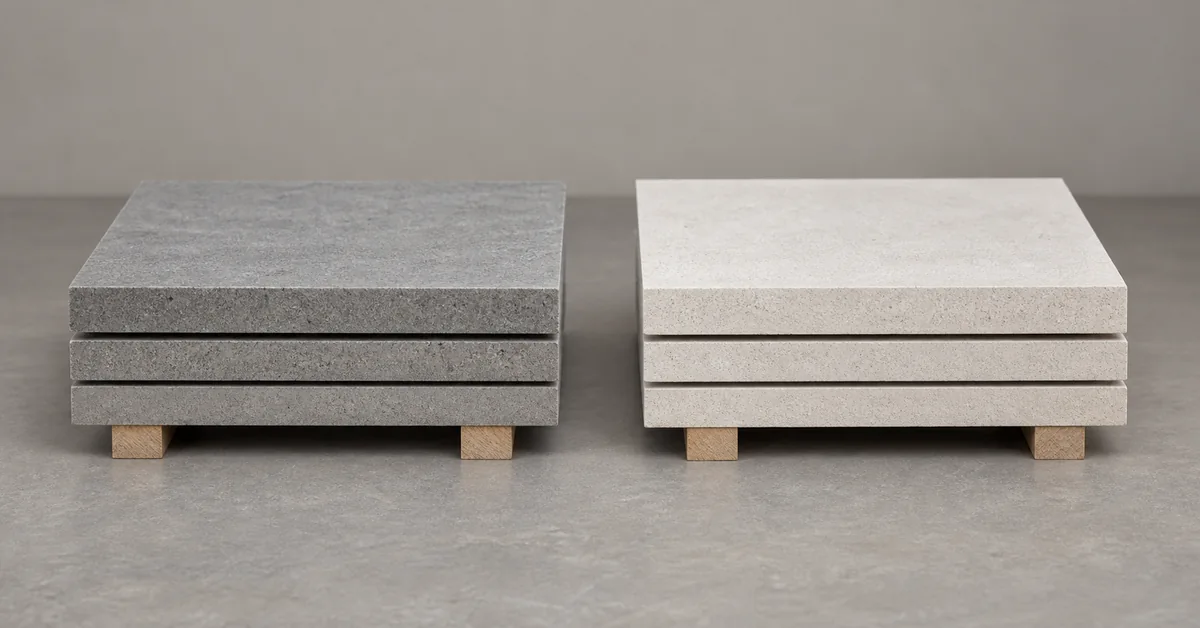
A fire rated partition board substitution can look like a simple purchasing decision: the specified product is unavailable, a different supplier offers a shorter lead time, or a contractor proposes a thicker sheet. However, matching the nominal thickness or a reaction-to-fire classification does not establish that the alternative can be used in the approved wall.
This guide focuses on change control after a partition system has been selected. It gives overseas buyers, architects and contractors a practical way to describe a proposed substitution, collect the relevant evidence and record a decision before ordering. It is not a replacement for project fire engineering or approval by the responsible authority.
Start With the Approved Assembly, Not the Replacement Brochure
Record the baseline wall design and its current revision before comparing alternatives. Include the required fire-resistance criteria, supporting report or listing, board designation, layers, framing, insulation, fixings and joint details. Keep the project drawing and the evidence together so the reviewer can see what is changing.
UL’s guidance on critical components explains that an hourly fire-resistance rating belongs to the complete assembly. Components have to meet the specifications in the design; a similar product name is not sufficient evidence of eligibility. These principles do not mean that Mainland boards hold a UL certification.
For the initial document package, use our partition board submittal checklist. The additional task here is to compare an identified change against that approved baseline.
Classify the Proposed Change Before Requesting a Price
A Listed Option Is Different From an Unverified Alternative
Read the actual design wording. It may identify particular manufacturers, describe permitted alternatives, or set explicit minimum and maximum requirements. Only use those allowances within their stated scope. Do not turn a permitted change to one dimension into permission to change a different component.
UL’s explanation of permitted assembly modifications distinguishes stated options and limits from changes that need additional evaluation. Confirm the applicable route with the project reviewer; a purchasing team’s acceptance does not replace a technical decision.
Record Exactly What Is Being Replaced
Identify whether the change concerns the board brand, product grade, manufacturing source, thickness, layer arrangement or another wall component. If several changes are proposed together, list each separately. A combined change can be harder to assess than a single substitution, and evidence for one part may not address the others.
Build a Side-by-Side Substitution Register
Use consistent units and document references. The following is a suggested review template, not a set of universal design values.
| Item | Record for Both Options | Review Question |
|---|---|---|
| Product identity | Manufacturer, grade, product code and relevant production site | Does the evidence identify the proposed product? |
| Board build-up | Nominal thickness in mm, tolerances, layers and orientation | Is the arrangement within the documented scope? |
| Support system | Stud designation, spacing in mm and wall height in mm | Do the framing and height conditions match? |
| Connections | Fastener specification, fixing pattern, joints and perimeter details | Are any associated components also changing? |
| Performance evidence | Report or listing reference, revision and stated limitations | Which document supports the proposed assembly? |
| Interfaces | Door, access-panel, penetration and head-of-wall references | Do the adjoining details remain applicable? |
Keep commercial comparisons in a separate section: quantity, packing, lead time and delivery basis. This prevents a cost saving from being mistaken for evidence that the technical requirements are unchanged.
Resolve Evidence Gaps Before Releasing the Order
A supplier’s datasheet can establish product identity and declared characteristics, but it may not resolve the fire performance of a different wall arrangement. Ask the supplier to identify the precise evidence supporting the change and any limitations, rather than providing an unrelated collection of certificates.
Where a condition falls outside the documented scope, refer it to the responsible design professional and the relevant approval process. An engineering assessment, additional test or a different documented system may be needed. The appropriate route depends on the project and jurisdiction; this article does not authorize an alternative design.
UL’s explanation of “has not been investigated” is useful here: an uninvestigated variation cannot simply be treated as covered by the certified rating. Lack of supporting evidence is not proof that the alternative will fail, but it is a reason not to claim that it has been verified.
When comparing available interior and partition panels, submit the baseline design and the proposed change together. The interior partition solutions category helps identify product options; neither page is approval to substitute into a named tested system.
Use a Written Release Decision and Traceable Labels
A useful decision record identifies the reviewer, date, drawing revision, evidence references, accepted scope and outstanding conditions. Suggested internal statuses are: accepted within the stated scope, awaiting evidence, or not accepted. Do not release an unresolved alternative as though it were approved.
After acceptance, update the purchase specification, inspection checklist and pallet identification. Separate approved material from superseded or unreviewed stock. Check that a supplier’s commercial product code can be traced to the designation used in the technical records.
Illustrative Scenario: A Thicker Alternative
Suppose a buyer receives an offer for a thicker sheet from a different manufacturer. The commercial comparison may show an attractive delivery date, but two variables have changed: product identity and thickness. Log both changes, request the relevant system evidence and obtain the required decision before release. Do not assume that additional thickness automatically preserves the original rating.
This is a hypothetical procurement example, not a tested wall specification or an account of a Mainland project.
Close the Change Record at Installation and Handover
Give the site team the accepted revision and verify that delivered labels match it. If an unexpected board, fixing or insulation product appears on site, raise a new discrepancy rather than extending the earlier approval by assumption.
Before concealment, follow the relevant partition installation inspection checks. Retain the accepted substitution record with the inspection evidence and as-built documentation so later maintenance teams know which construction was installed.
Frequently Asked Questions
Can two boards with the same thickness be substituted?
Not on thickness alone. Product identity, assembly details and the scope of the supporting evidence must be reviewed through the project’s acceptance process.
Does a matching reaction-to-fire classification prove equivalence?
No. A material classification does not establish the same fire-resistance performance for a complete partition. Review the evidence required for the wall assembly.
Is an engineering judgment the same as a new test certificate?
No. An assessment and a test report are different forms of evidence. Confirm who may provide the assessment, its limits and whether the relevant project authority accepts it.
What should I send a potential replacement supplier?
Provide the approved product and system references, the proposed change, board dimensions, quantities, project location and required documentation. Identify any deadline for technical review separately from the shipping deadline.
Prepare a Clear Technical Enquiry
Contact Mainland with your partition requirements to discuss available boards and supporting information. Sharing the approved baseline at the start helps identify evidence gaps before samples, production or shipment are committed.