
When a calcium silicate board supplier proposes a panel for a finished wall, the board name alone is not enough to approve the specification. Paint, wallpaper and ceramic tile each place different demands on the face, joints, primer and supporting frame. The right comparison starts with the exact board grade and the finish manufacturer’s instructions, then checks that the proposed build-up suits the room and project requirements.
This guide is for overseas distributors, architects, contractors and procurement teams preparing an interior lining schedule. It is a selection workflow, not a universal installation instruction. Board formulations and permitted applications vary by product; confirm values and methods in the current technical data sheet for the offered grade.
Start With the Intended Finish and Exposure
Before comparing quotations, describe where the board will be installed and what will cover it. Record whether the surface is dry or exposed to intermittent humidity, whether it is a painted wall, a wallpapered area or a tiled splash zone, and whether the board forms part of a tested fire-resisting assembly. These details help suppliers quote the same use rather than an apparently similar board with a different surface or application scope.
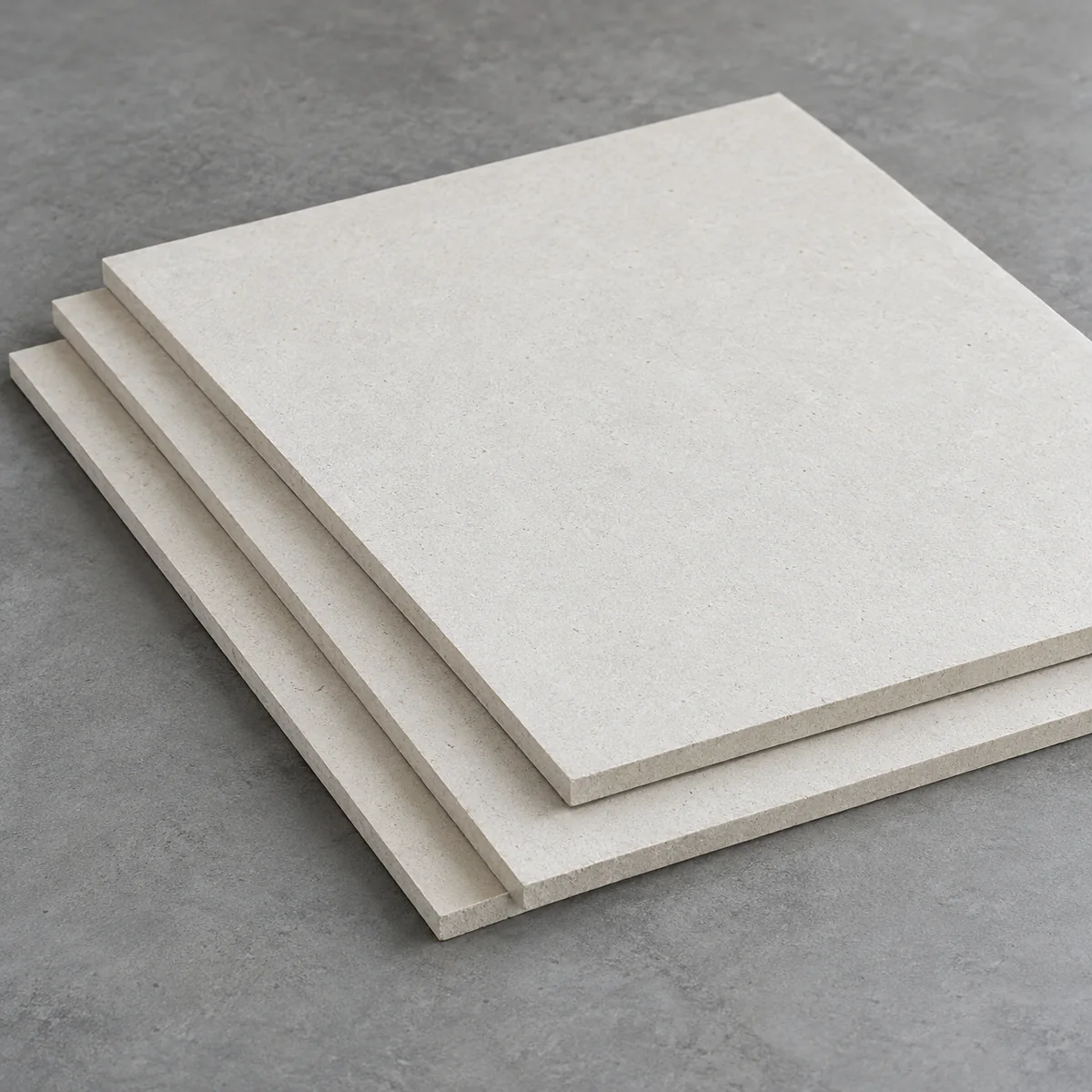
For an initial product comparison, review the dimensions and available information for Standard Calcium Silicate Boards. The broader board product range can help identify alternative panel families, but a category listing is not a technical approval or substitution decision.
Check the Board Face Before Choosing a Finish
Request the exact surface description for both faces: smooth, sanded, textured, primed or otherwise treated. Also confirm which face is intended to receive decoration and whether edges or cut surfaces need sealing. A surface that looks smooth in a photograph may still need preparation before a primer or adhesive can be used.
Ask the supplier to identify the board composition at the level needed for compatibility review, the recommended joint treatment and the preparation instructions. Where the data sheet specifies alkalinity, surface moisture or a primer, pass that information to the paint, wallpaper or tile-system supplier. Do not assume that a finish product approved for gypsum, cement render or another board is automatically suitable for the proposed calcium silicate panel.
Match the Specification to the Finish
Painted surfaces
Confirm the required surface preparation, compatible primer and number of finish coats with the board and coating manufacturers. Agree how joints, fasteners and transitions will be treated so they do not show through the finish. If the board is moisture-sensitive before coating or must be dry at application, use the product-specific limit and measurement method; avoid substituting a generic moisture percentage.
Wallpaper
Check that the board face and joint finish can provide the smoothness required by the selected wallcovering. Ask whether a sealer or lining paper is recommended and confirm adhesive compatibility with the substrate preparation. A sample panel should include the actual joint treatment, primer and adhesive because a small bare board sample cannot reveal joint telegraphing or differences in suction.
Ceramic tile
For tiled walls, check the board’s permitted use, support spacing, thickness, fixing pattern and maximum load with the board manufacturer and the complete tile-system supplier. Confirm that the specified adhesive, grout and any waterproofing layer are compatible with the substrate. A board described as moisture resistant does not, by itself, make a shower or wet-room assembly waterproof.
As one product-specific example, Promat describes its MASTERBOARD product as suitable for paint, wallpaper or tiles and for certain humid internal applications. That statement applies to that named product and its published guidance; it does not establish the finish compatibility, wet-area suitability or fire performance of another manufacturer’s board. Use the current data sheet and installation instructions for the actual product being purchased.
Keep Board Properties Separate From Assembly Ratings
When fire performance is part of the project, distinguish a board’s reaction-to-fire classification from a fire-resistance duration assigned to a tested wall, ceiling or other assembly. A board classification alone does not establish that an arbitrary partition build-up will achieve a stated number of minutes or hours.
For any claimed assembly performance, request the report or assessment and check that it covers the proposed board type and thickness, framing, insulation, fasteners, joint arrangement, board layers, orientation and penetrations. Changes to those details can take the proposed work outside the evidence scope. Ask the designer or local approval authority to confirm the applicable route for the project jurisdiction.
Likewise, a moisture claim should name the tested property and conditions. Moisture movement, water absorption, dimensional stability and resistance to deterioration are different measures. If the room is persistently wet or exposed to direct water, obtain written confirmation that the complete assembly and its finish are suitable.
Use a Finish Mock-Up to Resolve Interfaces
Before bulk purchase, agree a representative sample panel with the same board grade, face, joint, primer, adhesive and finish proposed for the project. For tile, include the intended fixing method and waterproofing where required by the design. For paint or wallpaper, include joints and fasteners. Record the sample identifier, product batch if available, finish products, application date and acceptance decision.
For a step-by-step approach to identity, condition and bulk-order checks, see our guide to approving calcium silicate board supplier samples. The sample review should settle visible finish and interface questions; it does not replace a structural calculation, fire test, waterproofing design or code approval.
What to Put in the Purchase Specification
- Product designation, intended location and finish type.
- Nominal length, width and thickness, plus the agreed dimensional tolerances.
- Required face, edge condition, joint treatment and surface preparation.
- Applicable technical data sheet revision and any project-specific test reports.
- Primer, adhesive, coating, wallcovering or tile-system compatibility documents.
- Storage, handling and conditioning instructions for the period before installation.
- Sample-panel reference and written approval status.
- Clear acceptance criteria for visible defects, dimensions and finish appearance.
Where a performance value affects compliance or warranty, write down the test method, conditioning, product identity and acceptance limit. A catalogue value without its method or scope may not be comparable with another supplier’s value.
Frequently Asked Questions
Can calcium silicate board be painted?
Some products are specified for painted finishes, but preparation and primer requirements vary. Confirm suitability for the exact grade and coating system with both manufacturers, then approve a representative mock-up.
Can I install ceramic tile directly onto calcium silicate board?
Only where the selected board, support and tile system are approved for that use. Confirm board thickness, framing, fixings, adhesive and waterproofing requirements for the actual wall and exposure.
Does moisture resistance mean a board can be used in a shower?
No. A moisture-resistance description does not automatically establish waterproofing or suitability for continual direct water. Verify the complete assembly and finish with the relevant manufacturers and project designer.
Does a non-combustible board provide a fire-rated partition?
Not by itself. Reaction-to-fire classification and fire resistance of a complete partition assembly are different claims. Check the test evidence for the exact proposed build-up and local approval requirements.
Request a Finish-Specific Board Review
Send the intended room, board dimensions, finish system, exposure conditions and project documents when requesting a quotation. Contact the Mainland team to confirm the offered grade, available technical documents and sample options before specifying or ordering.