
When an overseas buyer asks a fiber cement board manufacturer for asbestos-free evidence, a catalogue statement is only the starting point. The procurement team needs to connect the proposed product, the submitted sample and the laboratory report before deciding whether the evidence meets the project requirements.
This guide is for importers, architects and contractors reviewing new-board supply. It explains which documents and questions belong in a technical submission. It does not certify a Mainland product, prescribe a universal legal threshold or provide instructions for sampling suspected asbestos-containing materials.
Define the Evidence Required Before Comparing Prices
Ask the project consultant or importer to state the destination requirements, intended use and acceptance conditions. Specify whether a manufacturer’s declaration, a laboratory report, a particular sampling arrangement or additional independent review is required. Agree the document language and submission stage before ordering rather than discovering a missing requirement at customs or site delivery.
Use the Standard Fiber Cement Boards product page to identify the proposed board, then compare the available building-board product range by application. Do not transfer a report between different board ranges merely because both are described as cement-based panels.
Five Checks for the Manufacturer’s Submission
1. Match the report to an identifiable product
Compare the quotation’s product code with the report’s sample description and the supplier’s declaration. Record the manufacturer, manufacturing location, grade, thickness and sample reference where these are provided. If the report uses a generic description, request a documented explanation of how it relates to the product offered.
Separate the sample’s identity from the scope of the order. A report about one submitted sample does not, by itself, describe every product made at a factory. Our manufacturer batch-traceability guide helps organise the product, lot and pallet references needed to maintain that connection.
2. Review laboratory competence and applicable scope
The IEC listing for ISO/IEC 17025:2017 describes requirements for laboratory competence, impartiality and consistent operation. For procurement, request the laboratory’s current accreditation details and check the relevant scope with the issuing accreditation body. A logo on a report cover is not enough to establish coverage for the particular analysis.
Record the laboratory’s legal name, report number, issue date and verification route. Resolve differences between the laboratory named in the report and the organisation that supplied it. A factory quality-system certificate and a product analysis report serve different purposes; keep them as separate documents in the submission.
3. Read the test method and result wording together
BSI’s listing for BS ISO 22262-1:2012 identifies its subject as sampling and qualitative determination of asbestos in commercial bulk materials. Ask the laboratory whether its method and preparation are suitable for the submitted board matrix. A method number alone does not show that the sampling, preparation and reporting meet a particular purchasing requirement.
Keep the laboratory’s actual conclusion rather than replacing it with a stronger marketing phrase. If the result is qualitative, do not invent a concentration percentage. Where detection or reporting limits affect interpretation, ask the laboratory to explain them. A finding of non-detection under stated conditions is not a measurement of absolute zero, and it should not be rewritten as a guarantee covering all future production.
4. Check who selected and submitted the sample
Request the sample-selection record, date, identifying marks and submission chain. Establish whether a supplier, buyer or independent party selected it, and which production material it was intended to represent. Photographs can help connect labels and packaging, but appearance cannot identify asbestos.
The UK Health and Safety Executive’s guidance on asbestos analysis stresses representative samples and competent specialists. It also explains the accreditation requirements applicable in Great Britain; do not automatically treat those national provisions as the rules for every destination. For suspect existing materials, use competent professionals rather than cutting or breaking off a sample yourself.
5. Agree how evidence remains connected to repeat orders
Ask what changes would trigger a document review: product identity, formulation, raw-material source, manufacturing location or other factors relevant to the evidence. Record the notification and review process in the purchasing agreement. Do not invent a single expiry period that applies to every report or require a testing frequency without considering the project and applicable rules.
Keep the accepted declaration, full report and product mapping under the purchase-order reference. For broader factory controls and shipment documentation, use the separate manufacturer quality-control guide. Passing that wider review does not replace the specific material evidence requested here.
Technical Information to Put in the RFQ
The following schedule identifies information to obtain, not default acceptance values. Leave unsupported entries open for clarification. If a value is quantitative, record its unit and the conditions under which it was reported.
On a small screen, swipe the table horizontally to read all columns.
| Review field | Information to request | Question to resolve |
|---|---|---|
| Product identity | Grade, manufacturer, location, thickness in mm and product code | Does the offered board match the documented identity? |
| Sample record | Sample ID, selection party, date and submission references | Which material was selected, and what was it intended to represent? |
| Method and matrix | Method reference, edition and laboratory explanation of applicability | Is the analysis suitable for the board and the requested purpose? |
| Result and limitations | Original conclusion, units where applicable, limits and qualifications | Is the proposed acceptance statement supported without stronger wording? |
| Laboratory verification | Report ID, issue date, accreditation details and relevant scope | Can the report and applicable scope be checked independently? |
| Order approval | Destination requirements, reviewer, accepted documents and change procedure | What remains unresolved before the order is released? |
Frequently Asked Questions
Does a general factory certificate replace an asbestos report?
No. Check what each document actually assesses. A general quality-system certificate is not a laboratory result for the board being purchased. Request the product-specific evidence required by the project.
Does non-detection mean a measured concentration of zero?
No. Read the result with its method and limitations. Ask the laboratory to clarify interpretation rather than assigning a numerical concentration to a qualitative result or removing qualifications from the report.
Can a buyer verify asbestos-free status from an image?
No. Product photographs and visual samples are not laboratory identification. Use the required documentary and analytical evidence; do not disturb a suspect installed material to make your own visual comparison.
Does every repeat order need a new test report?
There is no blanket answer for every project and destination. Agree the sampling, testing, change-control and acceptance requirements with the responsible parties. Confirm whether existing evidence still represents the proposed supply instead of assuming that a report is either permanently valid or automatically expired.
Prepare a Document-Focused Board Enquiry
Use Mainland’s Technical Documents enquiry page to identify the product and documents you need. Include the intended use, destination, quantity and specified evidence requirements. The availability and scope of supporting documents must be confirmed for the selected product; this article is not a certificate or a promise of universal compliance.
Discuss your standard fiber cement board specification before releasing the order. Record unresolved questions in the technical submission rather than replacing them with an unsupported declaration.
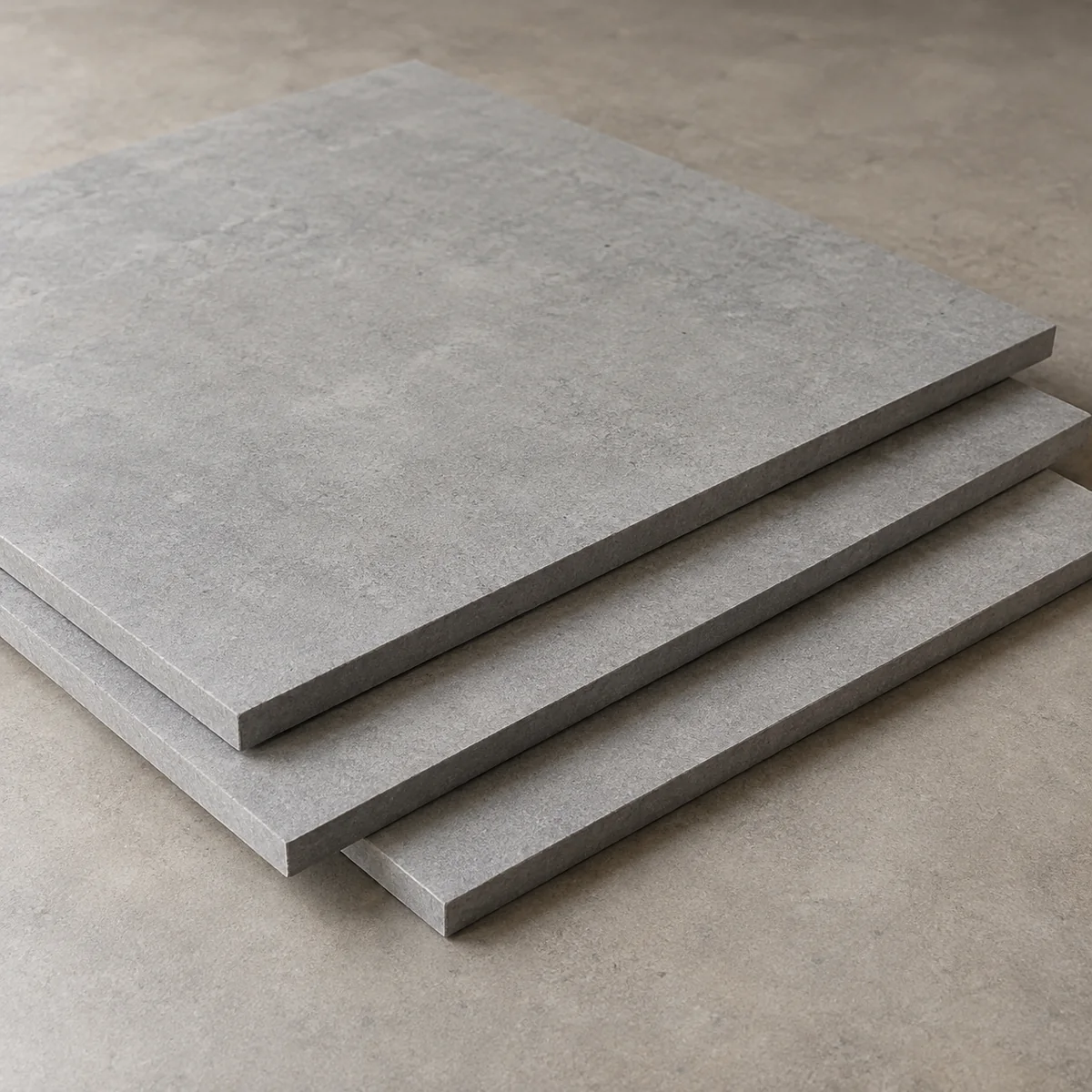
Illustrative board samples are not laboratory identification or test evidence. This procurement checklist does not replace professional asbestos advice or destination-specific acceptance review.