
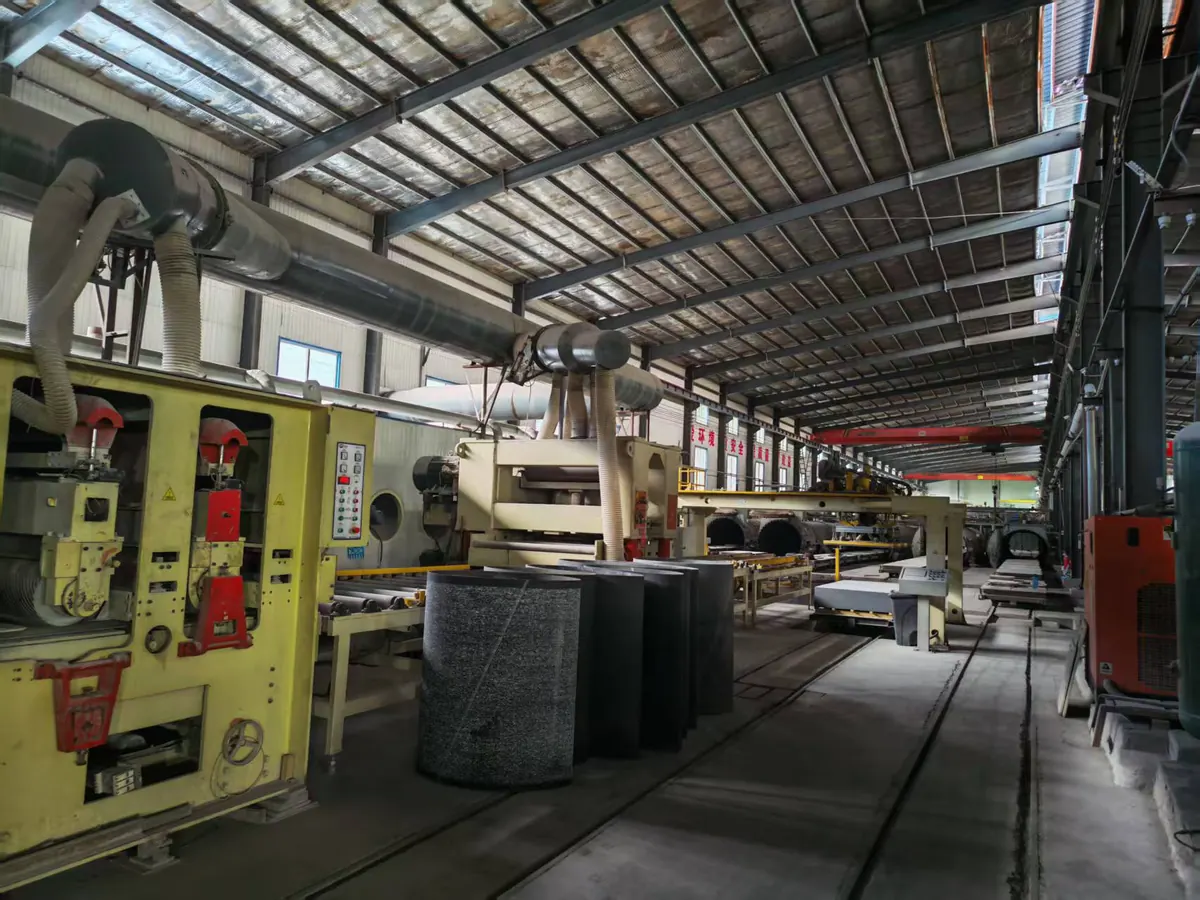
When choosing a fiber cement board manufacturer, overseas buyers often compare bending-strength figures before asking how those figures were obtained. A larger number is not necessarily a better match for the project if the reports describe different products, moisture conditions, specimen directions or test procedures.
This guide helps procurement teams, architects and contractors make a comparable document review before ordering. It is not a test procedure or a structural design calculation. The factory photograph provides production context, not a laboratory test result.
1. Match the Report to the Offered Board
Start with the manufacturer, product designation, grade, nominal thickness and report reference. Ask how the designation in the report corresponds to the commercial code on the quotation. Check whether the sample came from the offered production source and whether the report identifies any surface treatment or reinforcement relevant to the result.
Use the Standard Fiber Cement Boards product page for an initial supply discussion, or compare the compressed board option where the design calls for that grade. Neither listing establishes a universal flexural-strength value.
2. Separate the Test Method From the Product Specification
A test method describes measurement procedures; a product specification defines requirements within its scope. ASTM’s public C1185 overview identifies sampling and testing methods for fiber-cement products, including flexural strength. Its C1186 overview addresses flat fiber-cement sheets intended for exterior applications and includes mechanical and physical requirements.
Do not treat a reference to C1185 alone as proof that a board meets a specified product grade. Likewise, do not apply an exterior-sheet specification automatically to every interior substrate or composite panel. Record the relevant method, specification and editions accepted by the project reviewer.
A catalogue mentioning EN 12467 or another standard is a starting point for questions, not a replacement for the actual report and its scope. Request the applicable documents rather than copying acceptance thresholds from an unrelated product.
3. Check Moisture Conditioning and Test Direction
Dry, ambient and wet are not interchangeable labels
Ask what each condition means in the report, including conditioning duration, temperature, humidity or water treatment, and the timing of testing after conditioning. Use the actual method and report; this article does not prescribe a universal soaking time or moisture level.
As a product-specific example, the Swisspearl Construction datasheet distinguishes ambient and wet bending values and with-grain and across-grain directions. Those declarations apply to that named product, not to Mainland boards.
Record orientation explicitly
Confirm how specimens were cut relative to the manufacturing direction and which face was loaded where the method requires that information. Keep results for different directions identifiable. A report with only one unlabeled figure does not provide enough information for a like-for-like comparison.
4. Review Geometry, Loading and Units
Record specimen length, width, measured thickness and support span in the units used by the report. Also identify the loading arrangement, relevant loading rate and any stated deviations from the method. Avoid comparing a raw failure load in N with a calculated flexural strength in MPa as though they were the same property.
Flexural strength or modulus of rupture concerns bending failure; flexural modulus describes stiffness. They are not interchangeable. A datasheet may express the former in MPa and the latter in GPa, so check both the property name and unit before transcribing values into a tender comparison.
Where dimensions affect the calculation, use the report’s measured values and prescribed method. For practical dimensional review before shipment, see our manufacturer tolerance inspection checklist.
5. Distinguish Individual Results, Averages and Declared Values
Ask for the specimen count and the reported individual results, summary statistic and acceptance basis. An average, a lowest measured result and a declared classification value do not convey the same information. Identify which quantity the purchase specification actually requires.
Also record who selected the samples and how they were identified. Link the report to its sample description and retain any explanation of limitations. Do not invent a minimum sample count, universal acceptance margin or batch-release rule from a brochure figure.
Illustrative comparison, not Mainland test data
Suppose one quotation gives 12 MPa for a dry specimen in one direction, while another gives 10 MPa for a wet specimen in a different direction. These hypothetical numbers cannot establish that the first product is stronger for the intended use. First align the product, method, conditioning, orientation and reported statistic, then request a comparable result or a documented review decision.
6. Keep Material Results Separate From System Approval
A specimen test result does not, by itself, establish a safe installed panel span or flooring load. The project designer still needs to review the proposed thickness, supports, fixings, joints, exposure and relevant design evidence.
Keep bending results separate from reaction-to-fire, fire resistance of an assembly, moisture durability and fixing performance. Passing one material test is not blanket approval of every wall, facade, ceiling or floor use. Use the board product category to shortlist families, then review the exact product and system for the application.
7. Put the Review Decision Into the Purchase Documents
A useful comparison record should include:
- Product code, grade, nominal thickness and report identifier.
- Test method and edition, specimen dimensions and support span.
- Conditioning description and test direction.
- Property, unit, specimen count and the statistic being compared.
- Required acceptance criterion and the document defining it.
- Any deviation, unresolved question or limitation.
- Reviewer, date and the approved scope of the decision.
Connect approved documentation to the material received using our fiber cement board batch traceability guide. Batch identification helps connect records; it is not independent proof that a shipment meets every requirement.
Fiber Cement Board Manufacturer Report FAQ
Is a higher MPa value always the better choice?
No. Check whether the figures describe the same property, product, method, conditioning, direction and acceptance basis. Suitability also depends on the intended assembly and design requirements.
Can I use a dry result where the specification requires a wet result?
Not simply by relabeling it. Obtain evidence for the specified condition or the responsible reviewer’s accepted evaluation route.
Does flexural modulus mean flexural strength?
No. Modulus describes stiffness, while flexural strength concerns failure in bending. Keep their names, units and test definitions separate.
Does one report certify every thickness and production batch?
Do not assume that it does. Review the identified products, samples, stated coverage and limitations, then agree the evidence and inspection requirements for the actual order.
Request a Comparable Technical Quotation
Send Mainland your board and documentation requirements, including the intended application, dimensions, quantities, relevant methods and destination port. Asking a fiber cement board manufacturer for clearly identified evidence makes quotations easier to assess without treating a marketing figure as project approval.