
Fiber cement cladding can arrive with an approved finish and still lose value through poor storage before installation. For overseas distributors and facade contractors, the receiving plan should cover more than a count of undamaged pallets. It should identify who checks the delivery, where panels will be kept and who decides whether a wet or damaged bundle can be used. Establish that plan when reviewing the exterior fiber cement cladding panels, not after the container reaches the site.
Why Exterior Use Does Not Mean Unprotected Storage
Panels in a designed facade and sheets packed together on a pallet face different conditions. The EQUITONE planning and application guide discusses dry, supported storage and warns that moisture between stored panels can leave lasting surface deposits. Its instructions apply to the specified EQUITONE products; they are not a storage specification for every board sold as fiber cement.
Similarly, James Hardie’s handling and storage guidance distinguishes installed durability from keeping its products dry before use. It identifies potential problems with saturated products, including staining and changes at joints. Use these sources to understand the issue, then obtain the current instructions for the actual grade and finish being purchased. Neither document proves the performance of a Mainland product.
Seven Checks Before Panels Reach the Installation Team
1. Obtain product-specific storage instructions
Record the product name, finish, dimensions and document revision. Request the permitted support arrangement, stack limits, protection and handling method through the cladding technical-document request. Ask how to manage wet packaging and how the supplier determines readiness for installation. Do not copy a competitor’s bearer spacing, stack height or drying rule into the order as if it had been approved for the selected board.
2. Assign the storage area before dispatch
Name the person responsible for the receiving area and its readiness. Include the unloading route, available lifting equipment and the location of protected storage in the delivery plan. Verify that the proposed arrangement follows the selected product’s instructions. If the building programme changes, review the delivery date rather than assuming that unopened transport packaging makes an exposed holding area suitable.
3. Match each pallet to the approved order
Check labels against the packing list and approved schedule before distributing bundles. Different products in the exterior cladding board category may require different instructions. Record batch references and the intended elevation or installation area. This preserves traceability if a later inspection finds an appearance issue; a photograph of an unidentified stack is much less useful than one linked to a delivery and pallet number.
4. Inspect packaging without improvising a remedy
Photograph the load, labels and visible packaging condition before opening. Record tears, standing water, damaged supports or signs of moisture, with the inspection time. Follow the supplier’s instructions for removing transport wrap, retaining face protection and arranging temporary protection. These functions are not interchangeable. Avoid a blanket instruction to leave all plastic sealed or to remove every protective layer regardless of the panel finish.
5. Protect finish identity during sorting
Keep accepted panels identifiable when splitting a pallet or transferring material to a work area. Agree a sorting and handling method with the supplier and site team before starting. Retain relevant labels and approved appearance references. Our cladding colour-control guide explains why sample and batch records matter. Storage photographs should document condition, not become an excuse to mix unrecorded batches across an elevation.
6. Hold affected material for a documented decision
If a bundle is wet, label and separate it from material already cleared for installation. Report the affected pallet references, visible condition and known exposure to the supplier. Request the approved assessment and recovery procedure. Do not prescribe a universal drying time, apply heat or chemicals, or conclude that a board is acceptable simply because its visible face feels dry. Ask what evidence is needed to close the hold.
7. Release panels against agreed acceptance criteria
Identify who can authorise use, continued assessment or rejection. Record the decision and the documents behind it before fabrication or installation proceeds. Where dimensional checks are required, use the agreed condition and measurement method; see our board tolerance inspection guide. Do not force a questionable panel into alignment and treat the installed appearance as proof that the delivery complied.
A Receiving Log That Supports Decisions
The following is a suggested project record, not a test method or automatic rejection standard. Agree the inspection scope with the supplier and responsible project team. Keep condition assessment separate from deciding contractual liability: a wet package alone does not establish when exposure occurred or who is responsible.
| Record item | Evidence to retain | Decision supported |
|---|---|---|
| Product identity | Order, grade, finish and pallet references | Match material to the approved schedule |
| Arrival condition | Dated load and packaging photographs | Identify what needs closer inspection |
| Storage arrangement | Location, supports and instruction revision | Confirm the planned holding arrangement |
| Affected quantity | Identified bundles and observed condition | Separate held and released material |
| Supplier response | Assessment instructions and correspondence | Define authorised next steps |
| Release record | Inspection result, decision, date and approver | Control transfer to fabrication or installation |
Put Storage Responsibilities in the Procurement Handover
For an export order, hand over the approved product schedule, packing list, storage instructions, inspection plan and discrepancy contact together. Agree who maintains records as the shipment moves from importer to distributor to contractor. Make the procedure accessible to the receiving crew, not only the purchasing office.
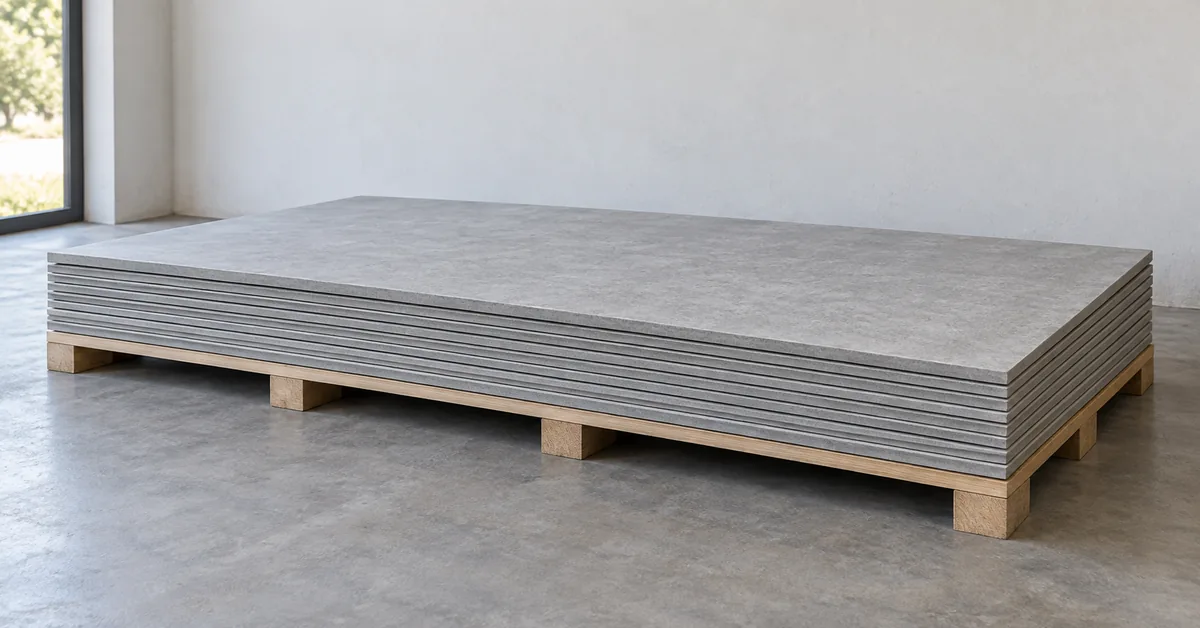
When requesting fiber cement cladding, share the panel finish, thickness, dimensions, quantity, destination and expected site holding conditions. Ask for the relevant product documents and proposed packing before the order is finalised. Discuss your cladding order and storage requirements with our export team. The featured storage illustration is a concept, not evidence of a specific shipment or an approved support spacing.
Frequently Asked Questions
Can exterior-grade panels remain in wet packaging?
Do not infer storage suitability from intended exterior use. Consult the selected product’s instructions and report the affected bundle. The packaging, finish and observed condition need review before the supplier or responsible project party decides the next step.
How long should a wet pallet dry?
There is no universal period stated in this guide. Ask for the product-specific method and release criteria. A fixed number of hours copied from another material or climate is not a substitute for an assessment of the affected panels.
Does white staining automatically mean the panel has failed?
Appearance alone is not a complete performance assessment. Record the condition and request an evaluation against the agreed product and finish criteria. Do not promise that cleaning will restore acceptability, or apply a treatment without approval for that finish.
Should an importer reject every wet delivery?
Use the agreed inspection and discrepancy process. Record the delivery condition, identify affected material and obtain a documented disposition before use. Technical suitability and responsibility for a claim are separate questions; neither is settled by a generic photograph or this article.